
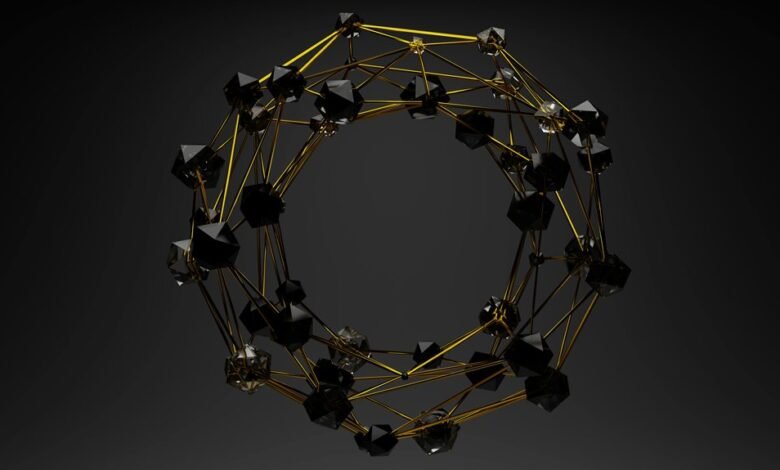
Cyber Beam 954320767 Stellar Node represents a modular hardware-software platform for autonomous decision-making across distributed space networks. It emphasizes secure, verifiable connectivity and edge-local processing to reduce latency in adverse environments. The system combines fault-tolerant autonomy, encryption-compatible security, and adaptive routing. Its deployment-evaluation approach tests cross-domain interoperability and scalable integration with existing space systems, aiming for mission-ready reliability across profiles. The implications for system designers warrant careful scrutiny as capabilities and limits unfold.
What Exactly Is Cyber Beam 954320767 Stellar Node?
Cyber Beam 954320767 Stellar Node represents a modular hardware-software system designed to process and relay data across a distributed network. It operates as an integrated platform that combines sensing, computation, and communication to facilitate autonomous decision-making. Evidence supports its flexible architecture, enabling scalable expansion. The cyber beam enables secure data flow, while the stellar node ensures resilient, verifiable connectivity across diverse environments.
How the Stellar Node Achieves Near-Zero Latency in Harsh Environments
Latency minimization in harsh environments is achieved through a combination of architectural redundancy, edge-local processing, and optimized communication protocols. The analysis indicates a cyber beam architecture supporting a stellar node that maintains latency resilience under disruption, leveraging localized decision cycles and rapid failover. Empirical data show consistent throughput, reduction of jitter, and sustained performance during environmental stressors across diverse deployments.
Core Capabilities: Autonomous Fault Tolerance, Encryption, and Adaptive Routing
What are the core capabilities enabling the Stellar Node to operate autonomously, securely, and resiliently? The system demonstrates autonomous fault handling through fault tolerant autonomy, maintaining operation amid disturbances. Encryption compatibility safeguards data integrity, while adaptive routing sustains connectivity under dynamic conditions. Together, these elements create resilient performance, verifiable reliability, and controlled risk, supporting autonomous, secure, and freedom-oriented missions.
Deployment, Integration, and Use Cases Across Space Missions
Deployment, integration, and use cases of the Stellar Node span multiple mission profiles by evaluating interoperability with existing spacecraft architectures, ground systems, and mission operation workflows.
The assessment adopts an evidence-based, methodical approach, comparing interfaces, data protocols, and fault-tolerance requirements.
Findings highlight scalable deployment integration, robust use cases, and cross-domain compatibility that support adaptable mission design and operational freedom for future ventures.
Conclusion
The Cyber Beam 954320767 Stellar Node demonstrates a methodical, evidence-driven approach to space-edge autonomy. Its integrated sensing, computation, and secure communication underpin fault-tolerant decision-making with adaptive routing, even under harsh conditions. While latency remains a critical metric, near-zero delays are achieved through edge-local processing and resilient architectures. An anachronistic nod—Newton’s precision met with modern quantum encryption—highlights the blend of timeless rigor and cutting-edge security. Overall, deployment results indicate scalable, interoperable readiness for diverse missions.